Not too long ago in our country's history, talking about making your house "greener" might get you labeled a hippie tree-hugger. But times change, and as gas, electricity, and water prices creep up, more and more homeowners are seeing the (strong) advantages that come with considering the environment when you make decisions about your household. Are you interested in making your home more energy-efficient -- and saving money in the bargain? You have a lot of options, from cheap to expensive, so read on to discover whether there are some big (or small) energy-saving opportunities that you're missing. ### Get an energy audit
Most utility companies offer an energy audit, oftentimes for free: They'll send an expert out to your house to take a look at all your appliances, your lights, your windows, your doors, and more -- then make recommendations for changes you can make that will save energy (and money) every month. ### Swap out your lightbulbs
Compact fluorescent or even LED bulbs are more expensive than incandescent bulbs, but they also last at least 10 times longer than incandescents and use only about 25% of the energy of an incandescent bulb. ### Pay attention to the sun
There's a lot you can do to heat and cool your home without spending any money at all -- but you'll need to keep tabs on where the sun is in the sky. ### Unplug unused electronics (or use power strips)
To eliminate the constant drain on your electricity, you should unplug any unused devices, or you can also use power strips with an on-off switch. ### Weather-stripping your windows
A relatively cheap and easy fix is weatherstripping your windows to eliminate those drafts and ensure that what's outside doesn't creep inside and vice versa. ### Turn down your water heater
Take a look at your water heater's settings and ask yourself if the hot water really needs to be as hot as you have it. ### Replace your water heater
The older a water heater is, the more energy it's going to take to maintain, so if your heater is looking a little spent, consider swapping it out for a newer model. ### Collect rainwater
If you keep a cistern of rainwater in your yard, then you'll always have a green way to water your grass and flowers in the spring and summer. ### Start a compost pile
It'll significantly reduce the amount of trash you're throwing away every week. ### Swap out your showerheads
Change your current shower head for a low-flow version that uses less water. ### Buy a smarter thermostat
If you don't have a thermostat that you can adjust to change the temperature at different times of the day, then you should definitely invest in one. ### Air-seal (and maybe insulate) your attic and basement
Check to see if your basement and attic are air-sealed and insulated. If not, consider investing in an upgrade. ### Turn off unnecessary water
If you have a guest bathroom that gets little use, or a kitchenette that only sees action once a year, then consider turning off the water to those sinks and other outlets. ### Use ceiling fans instead of air conditioning
Instead of turning on the air conditioning, try opening all your windows and turning on the ceiling fans. ### Reconsider space heaters, and use fans judiciously
Think about whether you can do without that space heater or fan in the window. ### Use cold or warm water to wash clothes
For the most part, you clothes will get just as clean in cold or warm water as in hot water. ### Only run full dish/laundry loads
It will save a lot of energy, water, and money if you make sure you're only washing full loads of both dishes and clothes. ### Add solar screens to windows
Solar screens can keep the sun out of any windows where it shines in directly, maintaining the cool cavern you've carefully cultivated. ### Install solar panels (or solar shingles)
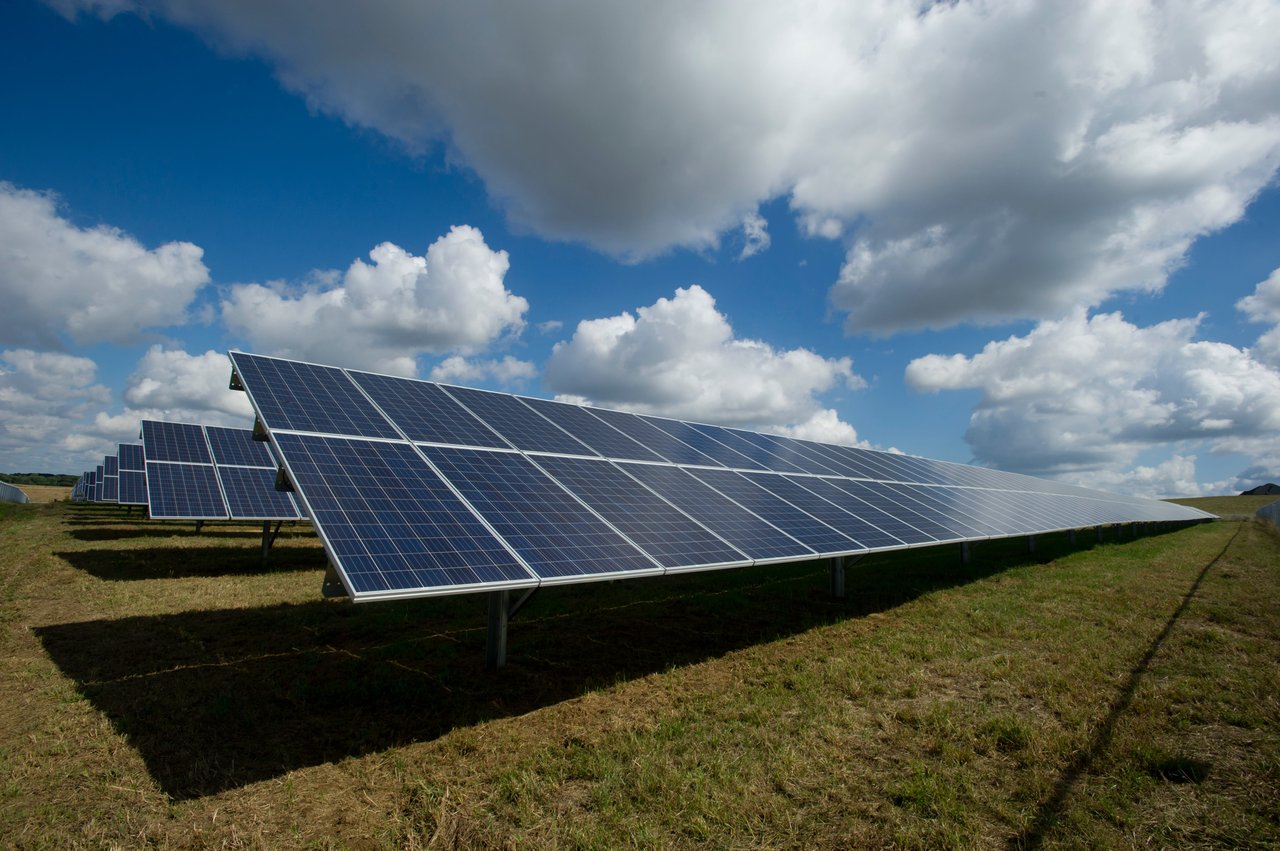
Solar panels can offset your energy usage (and your bill) by quite a lot. ### Choose a roof with a light color
To keep your attic relatively cool, pick light-colored roofing materials; they reflect the sun's rays more than absorb them. ### Use reclaimed wood or bamboo for floors
Consider a renewable wood source that looks good and doesn't require cutting down more trees. ### Add some storm doors
A storm door helps provide an additional layer of protection to the doorway, giving it an extra seal and allowing less to escape when you enter or exit through the door. ### Upgrade your appliances
Many appliances are now Energy Star certified, meaning they're more energy-efficient and "green" than their traditional counterparts. ### Tune up your heat and air conditioning once a year
Look at your heating every fall and your air conditioning every spring to make sure you're getting it all tuned up before you really need it. ### Replace your desktop with a laptop
Running a laptop takes less energy even with similar accessories. ### Replace your windows
Your windows should be well-sealed and draft-free, and sometimes there's nothing you can do to ensure that but replace them. ### Plant trees
A tree on the south side of your house can be a godsend in the summertime, creating a reservoir of cool air that spills over onto your house. ### Add a roof ridge vent
For attics that collect and trap a lot of heat, a roof ridge vent can be the perfect way to encourage that heat to escape and never return. ### Buy a wind turbine
Popping a wind turbine on your roof can generate energy all day, every day. ### Use concrete for counters or floors
It's relatively cheap and easy, requires no mining or tree-felling, and is one of the greenest options available on the market. ### Replace toilets with low-flow versions
Like showerheads, low-flow toilets are one of those changes that don't feel like a sacrifice but yield savings on your water bill nonetheless. ### Xeriscape
Many homeowners are turning to xeriscaping as a way to retool their outside space so that it still looks nice -- and natural -- but doesn't require a sprinkler to keep up. ### Use a manual push mower
One greener alternative to a riding mower or a motorized push version is an old-fashioned manual push mower. Deciding to make your home more energy-efficient can involve a simple move like turning off water to rarely used sinks and toilets, or as complicated and involved as replacing appliances and installing solar panels. Figure out your ideal level of investment and take things one step at a time -- before you know it, you'll have a green home that saves money without sacrificing comfort.